Serving the Lehigh Valley and Eastern Pennsylvania Open 24/7 During Winter Storms
A Frosty Snow Management market. Visit the Capital Region, NY site
Orange plow truck clearing a snow covered road during a storm

Snow Removal in Allentown, PA

Sidewalks cleared inside the city's 10 hour window, lots plowed and salted, and snow hauled off rowhome blocks where the code leaves nowhere to put it.

County Lehigh City of Allentown
Sidewalk deadline 10 hours Per the municipal code, see below
ZIP codes 18101, 18102 plus 18103, 18104, 18109
Snow removal in Allentown

Frosty Snow Management Lehigh Valley provides residential and commercial snow removal across Allentown, from Center City rowhomes to West End lots and South Side shopping plazas. Service starts automatically at the trigger depth written into your contract. Hand crews clear walks, steps and entrances so owners meet the city rule of a cleared path within 10 hours after snowfall ends, while trucks plow and salt lots and haul snow off blocks where there is no legal place to pile it.

Allentown sits on the floor of the Lehigh Valley, about 390 feet above sea level at the airport weather station, with the Lehigh River along its eastern edge and South Mountain rising along the south side of the city. Jordan Creek and the Little Lehigh cut ravines through town, so streets drop and climb more than the grid suggests. Blocks in Mountainville and on the South Side slopes ice up differently from the flat streets of Center City.

NOAA's 1991 to 2020 normals put average seasonal snowfall at Lehigh Valley International Airport at about 33 inches, with roughly eight days a winter bringing an inch or more. The storms that matter are nor'easters. The January 2016 blizzard dropped a record 31.9 inches over two days, and coastal storms often drag a rain, sleet and snow line across the valley that leaves heavy, wet snow capped with ice.

That mix is why salt timing matters as much as plowing here. A storm that ends as sleet on a Hamilton Street sidewalk refreezes after dark, and the city's 10 hour clock is already running.

Allentown is a city of attached housing. Center City, Old Allentown, Old Fairgrounds and the blocks around 7th Street are dense rows of brick rowhomes and twins, usually with a sidewalk in front, a narrow alley behind and no yard to take the snow. The West End adds larger twins and detached homes on wider lots, while the East Side and South Side mix postwar single family homes with apartment complexes. Commercial property runs from downtown office towers and Hamilton Street storefronts to strip plazas, churches, schools, medical offices and older industrial buildings near the river.

Clearing Center City Rowhome Blocks

Most snow removal advice assumes a driveway and a front lawn. Center City Allentown has neither. A typical block is a continuous run of brick rowhomes with front steps landing directly on the sidewalk, a curb lined with parked cars and a narrow alley behind. Every foot of that sidewalk belongs to someone who is on the clock, and there is nowhere obvious to put the snow.

The city code makes that harder in a useful way. Snow from a sidewalk cannot go into the traffic lane, and snow from private property cannot go into the street right of way, except where curbside parking is prohibited or there is no private property to hold it. On a rowhome block, that means walk crews shovel toward whatever space the property has, keep piles off steps and out of the way of doors, and leave corner ramps and bus stops open instead of burying them.

For landlords and property managers with several addresses on one block, grouping the units on a single route is what makes the 10 hour rule workable. The crew clears all the frontage in one pass, salts the steps, and comes back during long storms rather than waiting for the last flake.

How an Allentown Snow Emergency Works

Allentown's snow emergency rules are in Chapter 615 of the city code. The Mayor or a designated representative can declare an emergency any day of the week between 7:00 a.m. and 11:00 p.m., and it takes effect four hours after the announcement. From that point no vehicle may be parked on a designated snow emergency route, a list of roughly 30 streets that includes 7th Street, Tilghman Street, Chew Street, Union Boulevard and Lehigh Street.

The emergency ends when the city announces it, but any block cleared from curb to median for its full length drops out automatically. Tickets start at $35 if paid within 10 days and rise to $50 and then up to $100, and cars can be towed and held until the towing and storage costs are paid. Separately, when a street is posted for snow removal, parking becomes unlawful four hours after posting in metered and limited parking zones and six hours after posting on other streets.

Before the late January 2026 storm, forecast to bring well over a foot of snow, the city declared an emergency ahead of time and made its parking decks free to residents. The city also reminded residents that an open street means vehicles can pass safely, not that the pavement is clear. For commercial properties that is the key point: a plowed street out front does not mean your entrance, lot or sidewalk is safe.

Why the 10 Hour Rule Changes How You Plan

Many Lehigh Valley boroughs and townships allow 24 or even 48 hours to clear a sidewalk. Allentown allows 10, and the clock is tied to when the National Weather Service at the ABE airport reports that it stopped snowing, sleeting or raining. Owners do not get to count from sunrise or from when they noticed.

That timing shapes the service plan. Storms that end overnight need walk crews working in the dark. Storms that end as sleet or freezing rain need salt or treated material on the walk immediately, because shoveling alone will not leave a safe surface. On long nor'easters, crews return during the storm so that the final cleanup is a short pass instead of a foot of packed snow.

For commercial accounts we keep time-stamped service records for every visit, so if a slip claim or a notice of violation comes in, there is a record of when the walk was cleared and treated.

Commercial Lots from Hamilton Street to the City Line

Allentown's commercial property is varied: downtown office and mixed use buildings with sidewalk frontage and little or no parking, plazas with open lots along Lehigh Street and Union Boulevard, churches and schools with lots that must be clear on a specific morning, and older industrial buildings near the river with loading areas and tight turning room.

Each gets its own plan from the pre-season site walk: where piles go, which drains and hydrants to keep open, which entrances matter first, and where hauling will be needed once the stacking room runs out. Lots are plowed at the trigger depth written into the contract, treated with rock salt, treated salt or liquid brine depending on the forecast, and billed per push, per event or on a seasonal contract.

Where We Work in Allentown

The roads and districts that shape how snow gets cleared here, all within City of Allentown.

Hamilton Street and downtown

Office towers, storefronts and the arena district around 7th and Hamilton, where continuous sidewalks, bus stops and building entrances all need to be open before the morning rush.

7th Street

A dense corridor of small shops and restaurants on the ground floors of rowhome blocks, and a city snow emergency route from Union Street north to the city line.

Tilghman Street and Chew Street

Retail, restaurants, offices and the Allentown Fairgrounds through the West End. Tilghman is a snow emergency route from Front Street to 30th Street, and Chew runs as one from 4th Street to the city line.

Union Boulevard

The East Side's commercial strip of plazas, service businesses and apartments, and a designated snow emergency route.

Lehigh Street

South Side shopping plazas, restaurants and service businesses with wide paved lots; a snow emergency route from Auburn Street to South 12th Street.

Allentown neighborhoods and sections

  • Center City
  • Old Allentown
  • Old Fairgrounds
  • West Park
  • West End
  • East Side
  • Rittersville
  • South Side
  • Mountainville

City of Allentown Sidewalk and Snow Emergency Rules

Section 545-3 of the Allentown code requires anyone who owns, controls or occupies property fronting a city street to remove snow and ice from the sidewalk within 10 hours after it stops snowing, sleeting or raining, as reported by the National Weather Service at the ABE airport. A cleared path three feet wide counts as compliance. The same section bars putting snow from private property into the street right of way, or shoveling a sidewalk into the part of the street used by traffic, except where curbside parking is prohibited (and it is not a travel lane) or there is no private property available to hold the snow.

Enforcement runs through notices of violation, violation tickets and citations. Each day a violation continues can count as a separate offense, and the city may correct the violation and charge the cost to the owner, tenant or offending party. Chapter 615 separately sets a fine of $25 to $300 plus costs for depositing snow from private property in the street right of way, and $100 plus costs for pushing sidewalk snow into the traffic lane.

  • Sidewalk clearing: Within 10 hours after snow, sleet or rain stops (as reported by the NWS at ABE); a 3 foot wide cleared path counts as compliance
  • Snow emergency: The Mayor or a designee may declare a snow emergency any day between 7:00 a.m. and 11:00 p.m. It takes effect four hours after it is announced, and from then no vehicle may be parked on any designated snow emergency route (7th Street, Tilghman, Chew, Union Boulevard and Lehigh Street among them). A block cleared from curb to median for its full length is automatically released. Violations are ticketed at $35 if paid within 10 days, $50 from day 11 to day 20, and up to $100 after that, and vehicles may be towed and impounded at the owner's expense.

Source: City of Allentown Code, Chapter 545 (Streets and Sidewalks), Article I, Section 545-3. Ordinances change, so confirm with the municipality before relying on a deadline.

Read the full Allentown snow emergency guide

What Allentown Properties Need Most

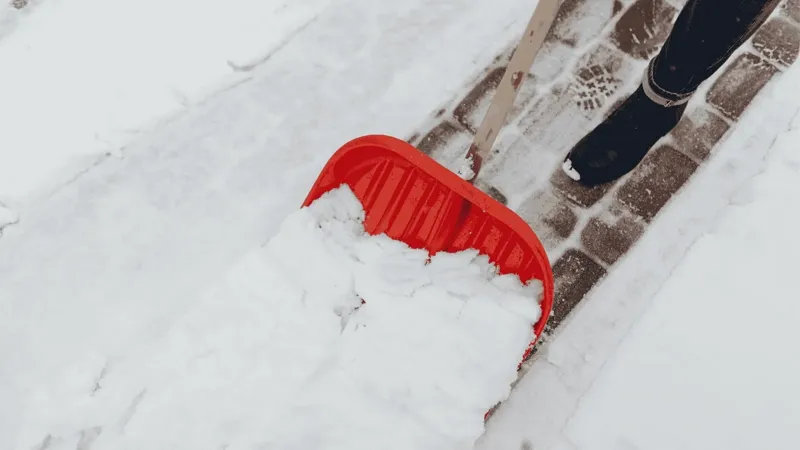
Snow shovel clearing a brick sidewalk down to the pavers

Snow Shoveling & Sidewalks

Rowhome blocks mean continuous frontage, front steps and corner ramps, and a 10 hour deadline counted from when the airport reports the end of precipitation. Hand crews clear walks during and right after the storm so an overnight snowfall does not become a morning violation.

Learn more
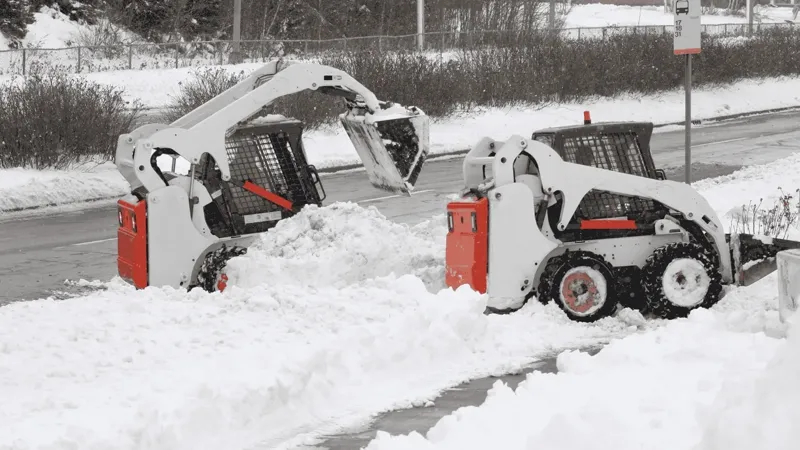
Two skid steer loaders clearing deep snow during a winter storm

Snow Hauling & Relocation

The city code bars pushing snow into the street, and many Center City lots, loading areas and parking pads have no room to stack it. Hauling moves piles off tight properties instead of letting them eat parking spaces for weeks.

Learn more
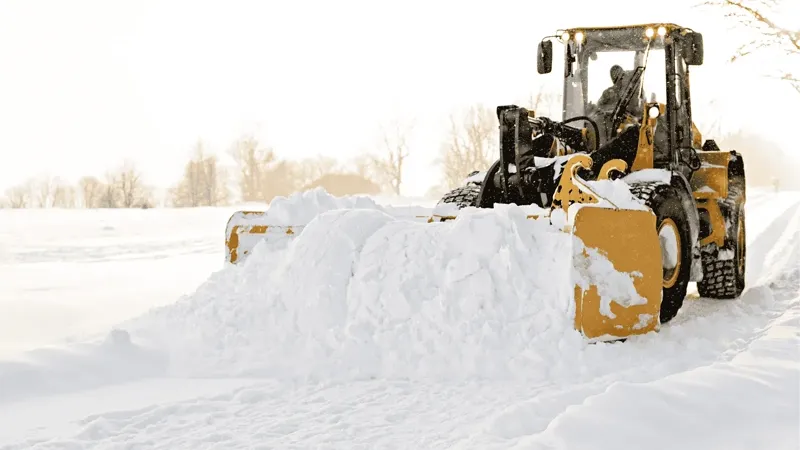
Wheel loader pushing a large snow pile across an open lot

Parking Lot Plowing

Plazas on Lehigh Street and Union Boulevard, church and school lots, and West End apartment lots need drive lanes open before the morning, with piles placed away from drains, hydrants and sight lines at the exits.

Learn more

Every Service We Offer in Allentown

Contract one service or combine several. Every property starts with a site walk.

  • Snow Plowing

    Truck and loader plowing for driveways, lots and private roads across the Lehigh Valley and seven surrounding counties.

  • Commercial Snow Removal

    Written snow and ice contracts for commercial sites, covering plowing, salting, walks, hauling and time-stamped service records.

  • Residential Snow Removal

    Driveways, front walks, steps and public sidewalks cleared for homes, twins and rowhomes on a set route after every storm.

  • Snow Shoveling & Sidewalks

    Hand crews clear sidewalks, steps, ramps and entrances for homes, rowhomes and storefronts, then treat for ice.

  • Driveway Snow Removal

    Driveways plowed or blown edge to edge, with the end of the driveway reopened after the municipal plow passes.

  • Parking Lot Plowing

    Parking lots plowed in a mapped order, with snow stacked away from drains, entrances and accessible spaces.

  • Salting & Ice Management

    Rock salt, treated salt and brine chosen by pavement temperature, for lots, walks, docks and entrances.

  • Roof Snow & Ice Dams

    Roof raking, ice dam steaming and flat roof snow removal for homes and commercial buildings.

  • 24/7 Emergency Snow Removal

    Around the clock storm crews for contracted sites, and same day help for others when capacity allows.

  • Snow Hauling & Relocation

    Loaders and trucks move snow off site or elsewhere on the property when stacking areas run out of room.

  • Warehouses & Distribution Centers

    Truck courts, dock aprons, trailer lots and employee lots cleared around 24/7 shift changes at big box logistics buildings.

  • HOAs & Townhome Communities

    Private roads, mailbox clusters, common walks and unit driveways cleared on a scope that matches your declaration and budget.

  • Apartments & Property Managers

    Apartment complexes and rowhome rental portfolios cleared on one multi-site contract, with a service record for every property.

  • Retail & Shopping Centers

    Parking fields, storefront walks, cart corrals, drive-throughs and fuel islands cleared in time for opening.

  • Healthcare & Medical Facilities

    Ambulance routes, patient entrances and accessible parking kept clear for medical offices, outpatient and dialysis centers.

  • Industrial & Manufacturing Sites

    Three-shift lots, material yards, rail sidings and heavy equipment routes cleared for plants that never stop.

Allentown Snow Removal Questions

Section 545-3 gives owners and occupants 10 hours after it stops snowing, sleeting or raining, as reported by the National Weather Service at the ABE airport. A cleared path three feet wide counts. If a storm ends at 2 a.m., the walk needs to be clear by noon, which is why we schedule walk crews to follow the end of the storm rather than wait for daylight.

Generally no. The city code prohibits putting sidewalk snow into the part of the street used by traffic (a $100 fine plus costs) and putting snow from private property in the street right of way ($25 to $300 plus costs). The code carves out limited exceptions where curbside parking is prohibited or there is truly no private property to hold the snow. When a property has no legal place to pile, we plan for hauling.

Once a declared snow emergency takes effect, four hours after the announcement, nothing may be parked on a designated snow emergency route. Cars left there can be ticketed and towed and impounded at the owner's expense. During the January 2026 emergency the city opened its parking decks to residents for free, so watch the city's announcements for the deck plan.

The ordinance applies to anyone who owns, controls or occupies the property, so both an owner and a tenant can be cited. Leases often assign the job, but the property still has to be clear inside 10 hours. Landlords with several rowhome units usually put all of them on one route with a seasonal contract so every address is handled after every storm.

Yes. Rear pads, garage aprons and the back walks off the alleys can be added to a residential contract, and we note alley width, overhead wires and turning room during the pre-season site walk. Plowing of the public alley itself is up to the city, so our work covers the private property along it.

Snow Removal in Allentown Starts With a Site Walk

We look at the actual property, agree where the snow goes, then give you a real number. Routes fill before the season starts.

Call Now Free Estimate