
Commercial Snow Removal
Written snow and ice contracts for commercial sites, covering plowing, salting, walks, hauling and time-stamped service records.
Learn more
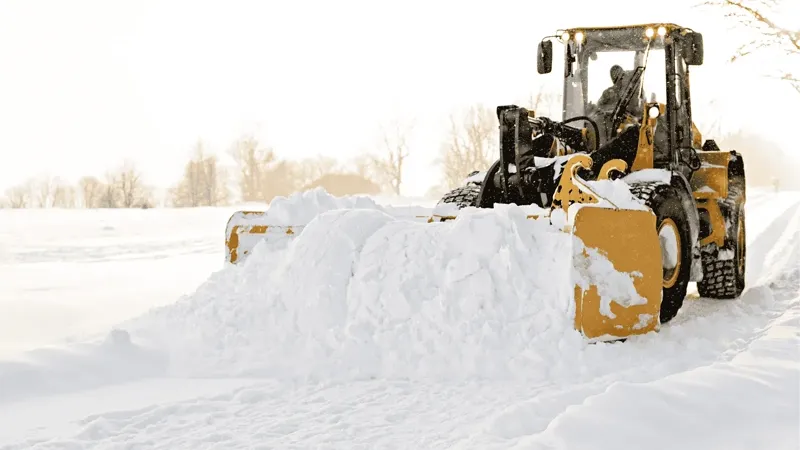
Plow trucks, loaders and skid steers for retail, office, medical and industrial lots, cleared in the order your site actually uses them.
Frosty Snow Management plows parking lots for retail centers, offices, medical buildings, apartment complexes, churches and industrial sites across the Lehigh Valley and surrounding counties. Each lot is mapped before the season with priorities, stacking areas and hazards. Plowing starts at the contracted trigger depth, crews return during long storms, and lots are finished with edge cleanup, cleared accessible spaces and salt where the contract calls for it.
Parking lot snow removal is a question of sequence and space. The order a lot gets plowed decides whether the first employee or customer can get in, and where the snow goes decides whether the lot still works three storms later.
Lots in this region range from a twenty space medical office off a busy road to acres of employee parking beside distribution buildings on Route 100. Older lots in Allentown, Reading and Bethlehem have tight turns, steep grades and no spare corners. Newer lots in the townships are wide and flat, which makes them fast to plow and exposed to drifting.
Our approach is the same at every size: map it before the season, plow it in the same order every storm, and keep the stacking plan intact so the lot does not lose spaces as the winter goes on.
Access from the road and emergency lanes are opened first so traffic and emergency vehicles can move.
The aisles that connect entrances to the building are cleared next.
Accessible parking and the ramps to the building are cleared and kept free of stacked snow.
Rows are cleared starting with those closest to the entrances.
Edges are pushed back, islands cleaned up and cart corrals or dumpster pads opened.
Salt or treated salt is applied where the contract calls for it, with extra attention to entrances and slopes.
Stacking areas are agreed at the site walk and marked on the site map. Good stacking areas sit downhill from drive aisles, away from storm drains and building entrances, and out of the sight lines at the lot exits. A pile placed uphill of a drain melts across the pavement every afternoon and refreezes every night, which turns a snow problem into an ice problem.
Exits onto busy roads such as the Route 22 frontage roads, Hamilton Boulevard or Route 100 need clear sight lines in both directions, so piles near the exits are kept low. When stacking areas fill after back to back storms, snow can be relocated to another part of the property or hauled off site.
The core of most lot routes, fast between sites and effective on small and medium lots.
Move large volumes on wide lots and build clean stacks without spreading snow across the pavement.
Work tight corners, islands and the spaces between parked cars on crowded lots.
Clear the sidewalks, entrances and ramps around the lot that no plow can reach.
Apartment complexes, around the clock warehouses and medical buildings do not empty out for a storm. Cars stay parked, trucks keep moving, and the plow has to work around them. On these lots we clear the aisles and open spaces first, then return for cleanup passes once vehicles have moved.
For residential communities, a notice to residents about when cleanup passes are planned, and where to move cars, makes a large difference. We work with property managers on that schedule before the season so the plan is ready when the first storm arrives.
Lots along state routes face a problem most people do not think about: the PennDOT plow ridge. Each pass on the road can refill the lot entrance with heavy, salted slush, so entrances on busy state roads are rechecked on return passes.
Hillside lots in Bethlehem and Easton need treatment before plowing on the slopes, while the wide, flat lots in Upper Macungie and Lower Nazareth can drift after the storm when the wind picks up. In the Poconos and around Hazleton, lots may see more frequent pushes during long, colder storms. The route plan for each lot reflects where it sits.
Mixed storms matter here too. When a nor'easter turns to sleet partway through, plowing ahead of the changeover keeps the sleet from locking onto a packed layer of snow, and the salt plan shifts to treated material if the pavement is cooling fast behind the storm.
Aisles and open spaces are cleared first so traffic can move, then crews return for cleanup passes once vehicles leave. On apartment lots, a resident notice about cleanup timing helps crews reach the spaces that were occupied.
Stacking areas are chosen at the site walk, usually islands, lot edges, unused corners or grass areas away from drains and entrances. They are marked on the site map. If they fill after several storms, snow can be relocated on site or hauled away.
They are cleared early in the sequence, right after entrances, fire lanes and main aisles, and snow is never stacked in them. Curb ramps to the building are cleared by the walk crew and treated for ice when salting is in the scope.
Yes, and sequencing lots around opening times and shift changes is part of building routes. The service window for your lot is agreed at signing so it reflects when your site actually needs to be open.
Entrances on state roads are rechecked on return passes and during final cleanup, because each pass by a road plow can push heavy slush back into the driveway opening. Keeping the entrance open is part of the lot scope.
Yes. Church lots, event venues and businesses with weekend hours can have their schedule written into the site plan, so the lot is cleared and treated before people arrive.
Available in 50 towns across Lehigh, Northampton, Berks, Bucks, Montgomery, Monroe, Carbon, Luzerne counties. Some of the busiest:
Written snow and ice contracts for commercial sites, covering plowing, salting, walks, hauling and time-stamped service records.
Learn more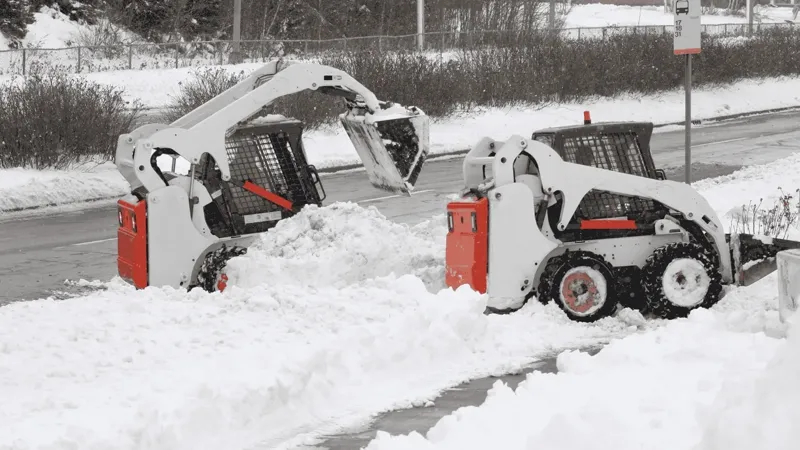
Loaders and trucks move snow off site or elsewhere on the property when stacking areas run out of room.
Learn moreParking fields, storefront walks, cart corrals, drive-throughs and fuel islands cleared in time for opening.
Learn moreTell us about the property and we will come back with a straight answer on scope and price after a site walk.
Lehigh Valley and eastern PA properties