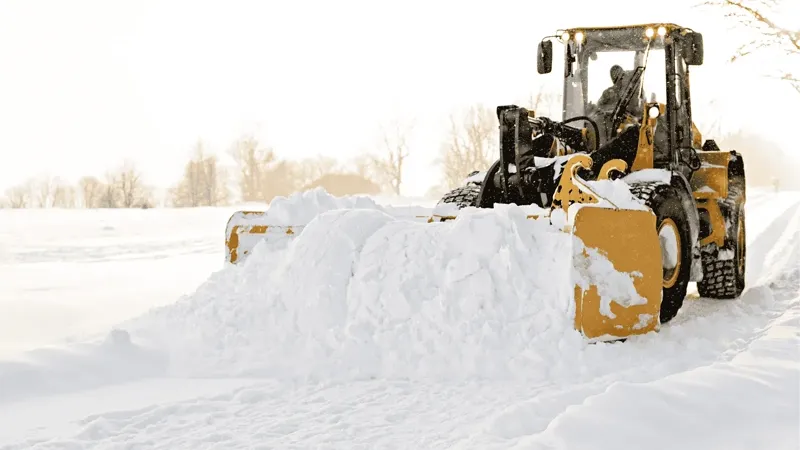
Parking Lot Plowing
Warehouse and industrial lots in the Humboldt Industrial Park and along I-81 and I-80 are large, open and exposed to drifting, so they need return passes during long storms.
Learn more
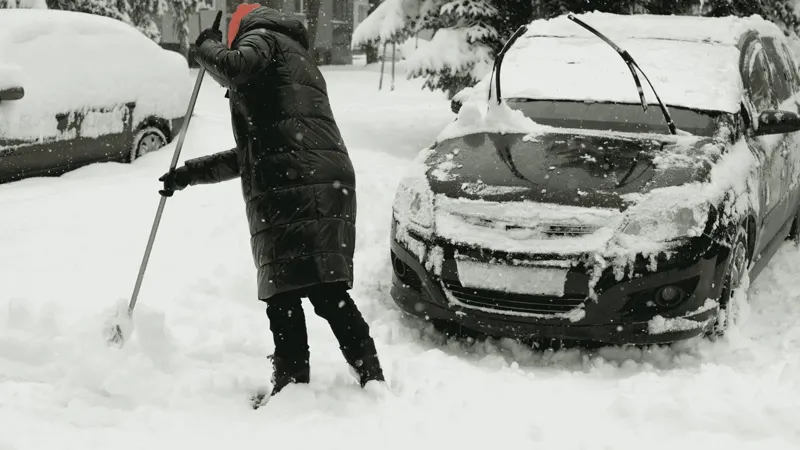
Plowing, salting and sidewalk clearing on the mountaintop, from Broad Street downtown to the Humboldt Industrial Park and the I-81 / I-80 logistics campuses.
Frosty Snow Management provides snow removal in Hazleton for businesses, warehouses, landlords and homeowners. We plow lots and driveways, pre-treat and salt pavement, and hand clear sidewalks and entrances, starting at the trigger depth written into your contract. Hazleton code requires a cleared path at least 16 inches wide on every abutting sidewalk no later than 24 hours after snow or freezing rain stops, and we build routes that meet it.
Hazleton sits on top of Spring Mountain, high above the river valleys. NOAA's cooperative station in the city is listed at about 1,650 feet, roughly 1,000 feet higher than the station in Wilkes-Barre, and that difference shows up in nearly every storm.
Elevation means colder pavement and snow that sticks when the valleys are just wet. The open plateau also takes wind, so drifting refills lots and truck courts after the plow has gone. The Wilkes-Barre/Scranton airport, the regional baseline, averages about 45 inches a season under the 1991 to 2020 normals, and the mountaintop is routinely harsher.
Nor'easters deliver the big totals, with forecasts from the National Weather Service in Binghamton. Expect long events where crews return to reopen drifted areas.
The city is dense: rowhomes and double blocks on a tight grid, plus storefronts, churches and small lots along Broad Street and Wyoming Street. Around it sits one of the biggest concentrations of warehouse and distribution space in the region, in the Humboldt Industrial Park and the logistics campuses near the I-81 and I-80 corridors, where truck courts, dock aprons and trailer lots run around the clock.
The roads and districts that shape how snow gets cleared here, all within City of Hazleton.
Storefront walks and crosswalk ramps that owners must keep clear, with no room to push snow into the street.
Manufacturing and distribution buildings where dock doors, truck courts and employee lots need to stay open through shift changes.
Warehouse and logistics campuses with acres of pavement, trailer staging and wind-driven drifting across open ground.
Distribution centers built for 24 hour truck traffic, where snow must be stacked or hauled away from dock and trailer space.
The main roads through the city and out to Hazle Township plazas.
Hazleton's Snow and Ice Removal article makes sidewalk clearing a nondelegable duty of the property owner. No later than 24 hours after snow, hail, sleet or freezing rain stops, the owner of every parcel abutting a public sidewalk, including vacant parcels, must clear a path at least 16 inches wide where clearances allow. Corner owners must also clear the ramp or curb leading to the crosswalk. Snow may not be shoveled, thrown or plowed into the street by hand or by machine, and may not be piled on a fire hydrant.
Source: City of Hazleton Code, Chapter 399, Article III: Snow and Ice Removal. Ordinances change, so confirm with the municipality before relying on a deadline.
Warehouse and industrial lots in the Humboldt Industrial Park and along I-81 and I-80 are large, open and exposed to drifting, so they need return passes during long storms.
Learn more
Mountaintop elevation keeps pavement colder than in the valleys, and the city requires frozen walks to be treated within 36 hours.
Learn more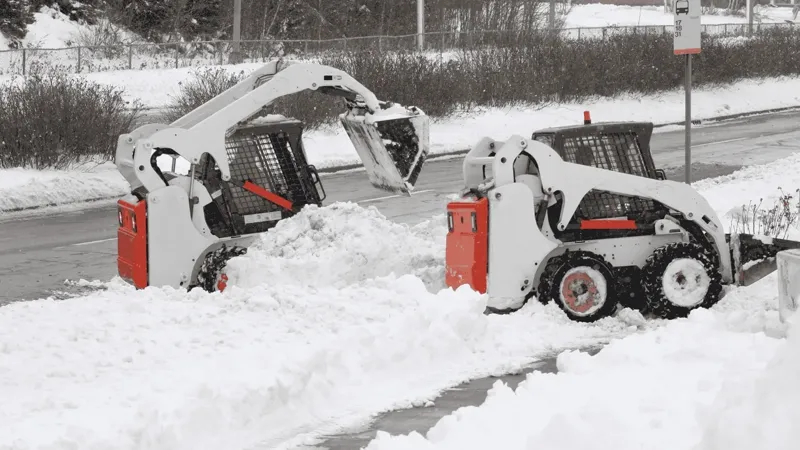
Truck courts and dense downtown lots run out of stacking room fast, and city code bars pushing snow into the street.
Learn moreContract one service or combine several. Every property starts with a site walk.
Truck and loader plowing for driveways, lots and private roads across the Lehigh Valley and seven surrounding counties.
Written snow and ice contracts for commercial sites, covering plowing, salting, walks, hauling and time-stamped service records.
Driveways, front walks, steps and public sidewalks cleared for homes, twins and rowhomes on a set route after every storm.
Hand crews clear sidewalks, steps, ramps and entrances for homes, rowhomes and storefronts, then treat for ice.
Driveways plowed or blown edge to edge, with the end of the driveway reopened after the municipal plow passes.
Parking lots plowed in a mapped order, with snow stacked away from drains, entrances and accessible spaces.
Rock salt, treated salt and brine chosen by pavement temperature, for lots, walks, docks and entrances.
Roof raking, ice dam steaming and flat roof snow removal for homes and commercial buildings.
Around the clock storm crews for contracted sites, and same day help for others when capacity allows.
Loaders and trucks move snow off site or elsewhere on the property when stacking areas run out of room.
Truck courts, dock aprons, trailer lots and employee lots cleared around 24/7 shift changes at big box logistics buildings.
Private roads, mailbox clusters, common walks and unit driveways cleared on a scope that matches your declaration and budget.
Apartment complexes and rowhome rental portfolios cleared on one multi-site contract, with a service record for every property.
Parking fields, storefront walks, cart corrals, drive-throughs and fuel islands cleared in time for opening.
Ambulance routes, patient entrances and accessible parking kept clear for medical offices, outpatient and dialysis centers.
Three-shift lots, material yards, rail sidings and heavy equipment routes cleared for plants that never stop.
Chapter 399 sets a fine of $50 to $350 per offense on conviction, and each 24 hour period the violation continues counts as a separate offense. The city can also clear the walk itself and bill the owner, with a lien if the invoice goes unpaid.
The side changes with the season. When the snow season starts in an even year, like the 2026 to 2027 season, parking is banned on the even-numbered side during each snowfall and for 48 hours after. A few streets have fixed rules listed in the code.
Yes. We set a trigger depth, clear dock aprons and truck courts in the order you choose, plan stacking or hauling away from trailer space, and keep time-stamped records of every visit.
Elevation. The city sits on Spring Mountain, roughly 1,000 feet above the Wyoming Valley floor, so valley rain or slush is often snow here.
We look at the actual property, agree where the snow goes, then give you a real number. Routes fill before the season starts.
Lehigh Valley and eastern PA properties