Snow Shoveling & Sidewalks
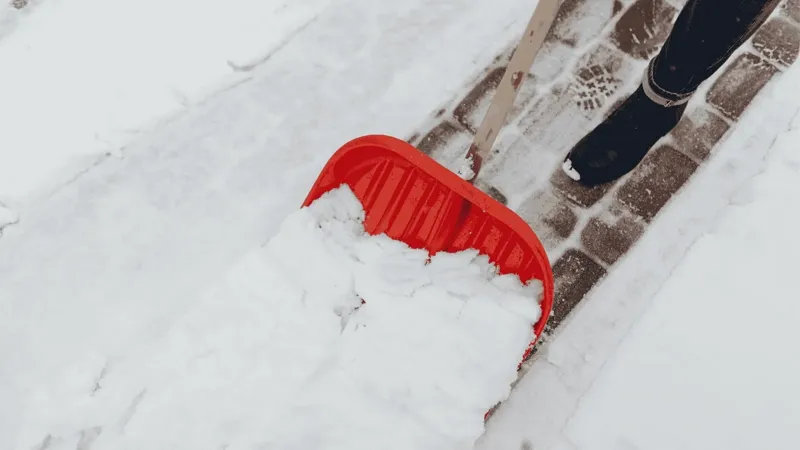
A 2 or 4 hour sidewalk deadline cannot be met by a plow truck. Rowhome frontages, front steps and storefront walks need a hand crew on the block while the snow is still tapering off.
Learn more
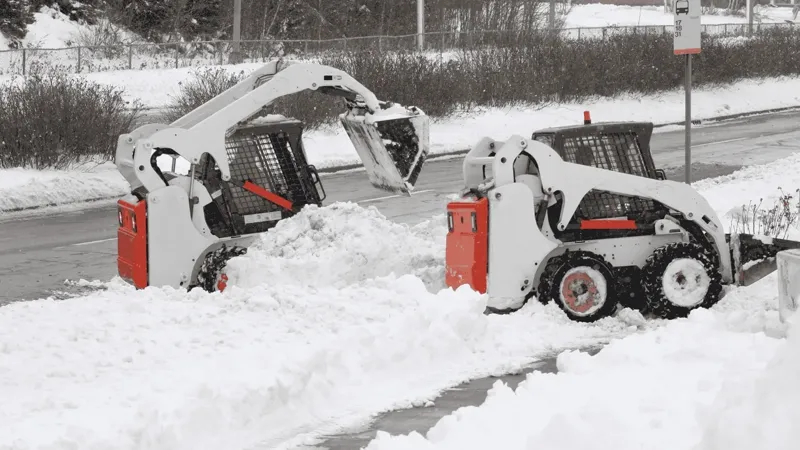
Plowing, salting and sidewalk clearing for Reading rowhomes, Penn Street storefronts and commercial lots, built around the city's short sidewalk deadlines and its snow emergency routes.
Snow removal in Reading, PA comes down to speed on the sidewalk and access in tight streets. City rules give most properties 4 hours after snow stops to clear a 3 foot path, and properties on Penn, Washington and Court Streets and on 2nd through 9th Streets between Penn and Washington only 2 hours to clear the whole sidewalk. We run hand crews for walks and steps and trucks for lots, on a fixed route with a trigger depth written into your contract.
Reading sits in a bowl. The Schuylkill River runs along the west side of the city, Mount Penn rises on the east with the Pagoda on its face, and Neversink Mountain closes off the south. Center City and the neighborhoods near the river sit around 300 feet, while streets on the east side climb steeply toward Mount Penn and Skyline Drive. That climb matters in a storm: a block in Hampden Heights or along the Mount Penn slopes can ice over and stay slick long after the flat grid near the river is wet pavement.
Most big snows here arrive with nor'easters tracking up the coast, and Reading often sits close to the rain and snow line. A storm that starts as snow can flip to sleet and freezing rain and then back again, which leaves a heavy, crusted layer that is far harder to move than fresh powder. Lake effect snow is not a factor this far southeast. The practical result is that ice management, not just plowing, decides whether a Reading sidewalk passes inspection the morning after.
Because the city is so dense, there is almost nowhere to put snow. Rowhome blocks have narrow sidewalks, steps that come straight down to the pavement, and cars parked tight to the curb on both sides. Snow cannot legally go back into the street, so crews have to plan where every shovelful lands before the first storm.
Reading is a rowhome city first. Brick and stone rowhouses with front steps and rear alleys cover Center City, Centre Park, Callowhill, the Prince and Queen Anne historic districts, Southside and Northeast, many of them split into apartments with an absentee owner. Twins and single homes take over in Hampden Heights, Glenside, Millmont, Northmont and College Heights. Commercial property runs from ground floor storefronts on Penn Street and 5th Street to mid rise office buildings downtown, converted mills and warehouses near the river, auto shops and small plazas along the arterials, and the church, school and nonprofit lots scattered through every neighborhood.
Reading's deadlines are among the shortest you will find in Pennsylvania. Four hours after the snow stops is a tight window for an owner who lives outside the city, and 2 hours for the whole width of a Penn Street sidewalk leaves almost no room for error. That is why downtown clearing has to start before the storm ends, with crews making passes during the snowfall so the final cleanup fits inside the window.
The daybreak rule helps overnight storms, but only a little. If snow stops at 3 a.m., the clock starts at first light, which means a downtown storefront needs its full sidewalk clear roughly 2 hours after sunrise, right when employees and customers are arriving. We plan those properties as the first stops of the morning route.
The rule covers owners, tenants, occupants, lessees and property agents, so a lease does not always settle who is on the hook. If you manage buildings in the city, put the sidewalk duty in writing with both your tenants and your contractor so no frontage falls through the gap.
A typical Reading block is a continuous row of brick fronts with steps landing on a narrow sidewalk, cars along both curbs and a service alley behind. A plow truck cannot help on the sidewalk side, and a snowblower throws snow onto steps, parked cars or the street. Most of this work is done by hand crews with shovels, push spreaders and small blowers used carefully.
Alleys are their own problem. Many are narrow, some are private, and they are often the only access to rear parking pads and trash areas. Compact equipment can open them, but only where there is a place to leave the snow, so we map alley stacking spots with owners during the pre-season walk.
For landlords with several rowhomes across Centre Park, Southside, Northeast and Glenside, the win is routing. Grouping addresses by neighborhood keeps a crew moving from frontage to frontage instead of driving across the city between stops, which is what makes a 4 hour window workable.
Mount Penn and Neversink Mountain shape how snow behaves here. Streets climbing the east side toward Skyline Drive and Duryea Drive hold snow longer, drain meltwater downhill across sidewalks, and refreeze after sunset. A walk that was clear at 4 p.m. can be glazed by 7 p.m. if the meltwater has nowhere to go.
The other factor is storm type. Nor'easters that bring a changeover leave layers of snow, sleet and ice that bond to concrete. Pretreating with brine or salt before the storm and following up with salt after the final pass is often the only way to meet the city's standard of a sidewalk free of snow and ice.
On commercial lots, the same freeze and thaw cycle shows up at entrances, loading areas and the low spots where piles melt. We place stacking areas downhill of walkways wherever the site allows, so meltwater runs away from doors instead of toward them.
When the Mayor declares a snow emergency, vehicles have to come off the 14 snow emergency routes, and the city clears those first because they carry traffic to hospitals, schools, bus routes and fire stations. For businesses along 5th Street, Penn Street, Lancaster Avenue or Perkiomen Avenue, that usually means better street access for our trucks during the emergency.
It also means a scramble for parking. Residents move cars into Parking Authority facilities or onto side streets, and side streets get tighter. If your lot or driveway opens onto a side street, allow for extra parked cars when you plan storm day deliveries and staff arrivals.
Commercial accounts in the city get time-stamped service records for every visit. If a slip and fall claim or a city notice comes in weeks later, you can show when the lot was plowed, when the walks were cleared and when salt went down.
The roads and districts that shape how snow gets cleared here, all within City of Reading.
Storefronts, offices and apartments over shops from the river up to City Park. Penn, Washington and Court Streets, and 2nd through 9th Streets between Penn and Washington, carry the city's 2 hour, full width sidewalk rule.
A city snow emergency route through the center, then the main road north toward Temple and Muhlenberg, lined with retail, fast food lots and medical offices.
The expressway along the west bank of the Schuylkill. The business parks, industrial buildings and riverfront lots between it and the city need their truck access open early.
Carries traffic across the north side of the city toward Pricetown Road, with industrial and flex buildings and the commercial lots that sit off its interchanges.
Route 222 swings around the city's western edge, and Lancaster Avenue, a snow emergency route, carries traffic southwest toward Kenhorst with plazas, service stations and small retail.
A snow emergency route running east out of the city toward Mount Penn and Exeter, lined with rowhomes, corner stores and small commercial lots on a steady grade.
Reading puts the sidewalk duty on every owner, tenant, occupant, lessee or property agent responsible for a property. Properties on Penn, Washington and Court Streets, and on 2nd through 9th Streets between Penn and Washington, must clear the entire sidewalk within 2 hours after snow and ice stop falling. Other properties get 4 hours and must open a path at least 3 feet wide, and business properties elsewhere get 4 hours but must clear the full sidewalk. If the snow stops during darkness, the clock starts at daybreak. These rules are enforced as a Quality of Life violation.
The Mayor can declare a snow emergency when significant snow or dangerous weather is forecast. Vehicles must then be off the 14 designated snow emergency routes, including 5th Street, Penn, Franklin, Washington, Walnut, Lancaster Avenue and Perkiomen Avenue, or they may be ticketed and towed at the owner's expense. The city has opened Reading Parking Authority facilities to residents at no charge during declared emergencies. Our separate Reading snow emergency guide covers the full route list and parking rules.
Source: City of Reading, QOL Violations Explained (QOL.012 Snow and Ice Removal). Ordinances change, so confirm with the municipality before relying on a deadline.
A 2 or 4 hour sidewalk deadline cannot be met by a plow truck. Rowhome frontages, front steps and storefront walks need a hand crew on the block while the snow is still tapering off.
Learn more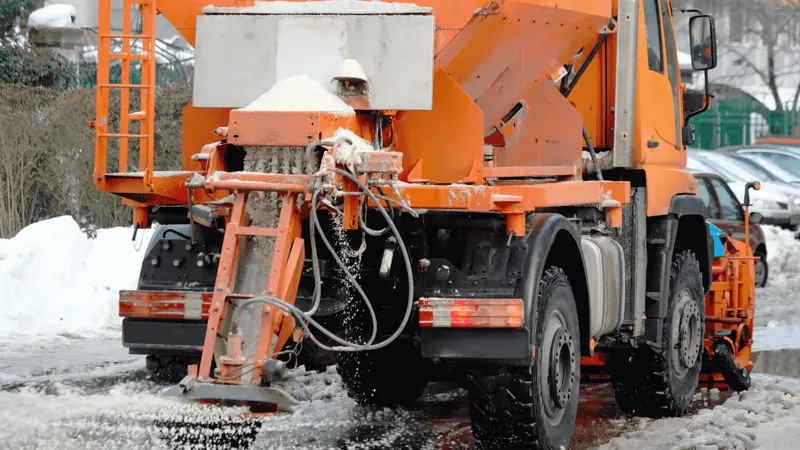
Storms that mix snow, sleet and freezing rain leave a crust that shovels cannot lift. Salt and pretreatment keep walks passable on Penn Street and on the steep east side blocks below Mount Penn.
Learn more
Downtown offices, mixed use buildings, landlords with several addresses and lots along 5th Street Highway and the bypasses need one crew handling lots, walks and records together.
Learn moreContract one service or combine several. Every property starts with a site walk.
Truck and loader plowing for driveways, lots and private roads across the Lehigh Valley and seven surrounding counties.
Written snow and ice contracts for commercial sites, covering plowing, salting, walks, hauling and time-stamped service records.
Driveways, front walks, steps and public sidewalks cleared for homes, twins and rowhomes on a set route after every storm.
Hand crews clear sidewalks, steps, ramps and entrances for homes, rowhomes and storefronts, then treat for ice.
Driveways plowed or blown edge to edge, with the end of the driveway reopened after the municipal plow passes.
Parking lots plowed in a mapped order, with snow stacked away from drains, entrances and accessible spaces.
Rock salt, treated salt and brine chosen by pavement temperature, for lots, walks, docks and entrances.
Roof raking, ice dam steaming and flat roof snow removal for homes and commercial buildings.
Around the clock storm crews for contracted sites, and same day help for others when capacity allows.
Loaders and trucks move snow off site or elsewhere on the property when stacking areas run out of room.
Truck courts, dock aprons, trailer lots and employee lots cleared around 24/7 shift changes at big box logistics buildings.
Private roads, mailbox clusters, common walks and unit driveways cleared on a scope that matches your declaration and budget.
Apartment complexes and rowhome rental portfolios cleared on one multi-site contract, with a service record for every property.
Parking fields, storefront walks, cart corrals, drive-throughs and fuel islands cleared in time for opening.
Ambulance routes, patient entrances and accessible parking kept clear for medical offices, outpatient and dialysis centers.
Three-shift lots, material yards, rail sidings and heavy equipment routes cleared for plants that never stop.
Most properties have 4 hours after snow and ice stop falling and must open a path at least 3 feet wide. Properties on Penn, Washington and Court Streets, and on 2nd through 9th Streets between Penn and Washington, have 2 hours and must clear the entire sidewalk. If the snow stops overnight, the clock starts at daybreak.
Yes. We group scattered rentals into one route so each frontage, set of steps and rear alley gate gets cleared and salted in order, and we log the service time at each address so you have a record if a tenant or the city asks.
It cannot go back into the street, so we agree on stacking spots before the season, such as a curb strip, a rear yard or a corner of a lot, and on tight blocks we cut the pile down with salt or schedule hauling after big storms.
Yes. Grades on the east side and in Hampden Heights are where ice forms first, so those properties get salt applied as part of each visit rather than as an add on, and we note the steepest approaches on the pre-season site walk.
It changes street access, not your lot. When the Mayor declares an emergency and the snow emergency routes clear of parked cars, our trucks can reach lots along 5th Street, Penn Street and Perkiomen Avenue more easily, but we still plow on the trigger depth in your contract.
We look at the actual property, agree where the snow goes, then give you a real number. Routes fill before the season starts.
Lehigh Valley and eastern PA properties