Serving the Lehigh Valley and Eastern Pennsylvania Open 24/7 During Winter Storms
A Frosty Snow Management market. Visit the Capital Region, NY site
Orange plow truck clearing a snow covered road during a storm

Snow Removal in Bethlehem, PA

Plowing, salting and hand shoveling for Bethlehem properties on both sides of the Lehigh River, from the North Side historic district to the South Side hillside and the West Side.

County Northampton City of Bethlehem
Sidewalk deadline 24 hours Per the municipal code, see below
ZIP codes 18015, 18017 plus 18018
Snow removal in Bethlehem

Frosty Snow Management provides snow removal in Bethlehem, PA for homeowners, landlords and commercial properties in both the Northampton County and Lehigh County parts of the city. Crews plow lots and driveways, hand clear sidewalks, steps and curb ramps, and salt or brine walking surfaces. Service starts automatically at the trigger depth written into your contract, and sidewalks are cleared with the city's 24 hour rule and three foot minimum path in mind. Call us or request an estimate before the season starts.

Bethlehem sits in the Lehigh River valley, with the river splitting the city into a north half (Center City, the North Side and the East Side) and the South Side, which climbs up the flank of South Mountain. The West Side, across the Monocacy Creek from the historic core, sits in Lehigh County, while most of the city lies in Northampton County. That split matters for property owners with holdings on both sides, but the city ordinance applies the same way everywhere inside Bethlehem.

Elevation is the biggest variable in a Bethlehem storm. Downtown sits at roughly 360 feet, but the Lehigh University hillside and the streets above the South Side climb steeply toward the ridge. A mixed nor'easter that brings wet snow or sleet in the valley can stay all snow higher up, and grades like those on the South Side hillside turn a thin glaze into a real hazard. Crews on hill routes carry more material and treat slopes, steps and landings before they worry about the flat spots.

Most big Bethlehem storms are coastal nor'easters that arrive from the south and east, often with a changeover line that sets up right across the Lehigh Valley. Lake effect snow is not a factor here. What does repeat is the freeze and thaw cycle after a storm: plowed banks melt on a sunny afternoon, run across walks and driveways, and refreeze overnight. That refreeze, not the storm itself, is what trips people on the brick and slate sidewalks of the older neighborhoods.

Bethlehem's housing ranges from 18th and 19th century stone and brick buildings in the Moravian historic district and rowhomes with narrow walks on the North and South Sides, to twin homes and postwar single family streets on the West Side and East Side, plus student rentals around Lehigh University. Commercial property includes Main Street and Broad Street storefronts, the SteelStacks and Southside Arts District area, strip centers along Stefko Boulevard and Schoenersville Road, medical and office buildings, and warehouse and manufacturing campuses in the Lehigh Valley Industrial Park sites on former Bethlehem Steel land along the river.


Sidewalks are the real workload in Bethlehem

In much of Bethlehem the sidewalk, not the driveway, is the job. Center City and the North Side are full of attached and semi-attached buildings with no off street parking, stone steps that meet the walk directly, and brick or slate paving that heaves and holds water. A snowblower cannot work those surfaces cleanly, and a plow truck has nowhere to put the snow. Crews with shovels, push brooms and walk behind spreaders do most of the work.

The city's 24 hour window sounds generous until a storm ends at 2 a.m. on a weekday and the owner lives out of town. For landlords with student rentals near Lehigh, owners of downtown mixed use buildings, and anyone who travels in winter, a seasonal walk route removes the guesswork. We clear to the full width where practical, always leave at least the three foot path the city looks for, open the curb ramp at the corner, and salt the finished surface so the melt from the bank does not refreeze across it.

Corner properties and buildings on snow emergency routes need extra care. The city pushes snow curb to curb on those routes, which rebuilds the bank at the edge of the walk. We schedule a return visit after the city plows pass so the curb line and ramp are reopened, rather than leaving a clean walk that ends in a wall of plowed snow.

Hills, the river and how a Bethlehem storm plays out

Lehigh Valley International Airport, a few miles north of the city, averages about 33 inches of snow a season under the 1991 to 2020 NOAA normals, with January and February the snowiest months. Individual winters swing well above and below that. What the average does not show is how uneven a single storm can be across Bethlehem itself.

The South Side rises from the river flats near SteelStacks up through the Lehigh University campus toward the ridge of South Mountain, and some of those streets are among the steepest in the Valley. Wet snow that is manageable downtown becomes compacted and slick on a grade within a few hours of traffic. We route hillside properties with that in mind: pretreatment before the storm where the forecast supports it, plowing and shoveling during long events, and a salt pass on slopes and steps after the last push.

The river corridor has its own behavior. Low ground along the Lehigh and the Monocacy Creek holds cold air after a storm clears, so parking lots and walks near the water can stay icy long after the hillside has dried. Those properties often need a second salt visit the morning after a storm even when no new snow falls.

Commercial lots from Stefko Boulevard to the industrial parks

Bethlehem's commercial property falls into a few clear types. Retail strips along Stefko Boulevard and Schoenersville Road need drive lanes, stalls and storefront walks open before opening time, and snow stacked where it will not block sight lines or drain onto walkways. Medical offices and apartment complexes need entrances, accessible parking spaces and walkways treated first, because that is where slips happen.

The warehouse and manufacturing sites in the Lehigh Valley Industrial Park areas on former Bethlehem Steel land run around the clock. Truck courts, dock aprons, trailer drop lots and the employee walk from parking to the door all need service during the storm, not after it. We set up those sites with a pre-season walk, hazards staked, stacking areas agreed, and a service trigger written into the contract, and we keep time stamped records of each visit for the property manager.

When a site runs out of room to stack, snow hauling is the fix. Pushing snow into the street is prohibited under the city ordinance, so large lots with limited green space should plan a haul option before the first storm rather than after the piles take over stalls.

Planning your Bethlehem snow season

The best time to set up service is before Thanksgiving. A pre-season site walk lets us mark curbs, drains, fire hydrants and fragile features like historic steps and fences, agree where snow goes, and set the trigger depth written into your contract, commonly 1 to 2 inches for commercial lots. Residential walk routes are built around the city's 24 hour rule so every stop is finished well inside that window.

Seasonal contracts suit owners who want predictable costs and guaranteed route position. Per push and per event billing suit properties that only need help in bigger storms. Either way, you get a realistic service window agreed at signing, a crew that knows your property, and a clear record of when the work was done.

Where We Work in Bethlehem

The roads and districts that shape how snow gets cleared here, all within City of Bethlehem.

Route 378 and the Hill to Hill Bridge

The main north and south link between Center City and the South Side, then up the ridge. Properties along it see heavy plow traffic and steady salt spray, and grades near the hillside need early treatment.

Route 412 (South Side to I-78)

Carries truck traffic from the South Side industrial land toward I-78. Warehouse and industrial lots off this corridor need truck courts and dock aprons open before shift changes.

Stefko Boulevard

A retail strip on the city's northeast side with shopping center lots, pad sites and fast food drive throughs where lanes, stalls and entrances all need clearing before opening.

Schoenersville Road

A major arterial running north out of the city toward Hanover Township, lined with medical offices, apartments and commercial lots. It is also one of the city's mapped snow emergency routes.

Broad Street and Main Street

Downtown storefronts, restaurants and upper floor apartments where sidewalk clearing and curb ramps matter more than plowing.

Lehigh Valley Industrial Park sites on the South Side

Distribution and manufacturing buildings on former Bethlehem Steel land, where large lots, loading docks and long pedestrian routes from parking to entrances all need a plan.

Bethlehem neighborhoods and sections

  • Center City historic district
  • North Side
  • South Side
  • West Side
  • East Side
  • Mount Airy
  • Marvine and Pembroke
  • Northampton Heights
  • Southside Arts District
  • Lehigh University hillside
  • SteelStacks area

City of Bethlehem Sidewalk and Snow Emergency Rules

Bethlehem Codified Ordinances Article 721.03 makes anyone who owns, controls or occupies a lot responsible for clearing snow and ice from the sidewalk in front of it within 24 hours after the snow, sleet or hail stops. The city's snow FAQ adds that a cleared path at least three feet wide counts as compliance and that the abutting owner must also clear the curb ramp. Leaving a walk uncleared is treated as a nuisance, punishable under Article 721.99 by a fine of up to $300 per violation plus costs. The same section also makes it a nuisance to plow snow from a parking lot or sidewalk into the street or into a traffic lane.

  • Sidewalk clearing: Within 24 hours after snow, sleet or hail stops falling; a cleared path at least 3 feet wide counts as compliance
  • Snow emergency: Under Article 523 a snow emergency takes effect four hours after it is declared. Parking is then barred on posted snow emergency routes (the city map includes streets such as Broad Street, Union Boulevard, 8th Avenue, 4th Street, Linden Street, Main Street and Schoenersville Road), with an even side and odd side towing schedule unless signs say otherwise. Vehicles left on a route can be ticketed and towed. Fines are $50 for a first violation, $150 for a second and $300 for a third or later. See our Bethlehem snow emergency guide for the full rules.

Source: City of Bethlehem Codified Ordinances, Article 721 (Streets and Sidewalks). Ordinances change, so confirm with the municipality before relying on a deadline.

Read the full Bethlehem snow emergency guide

What Bethlehem Properties Need Most

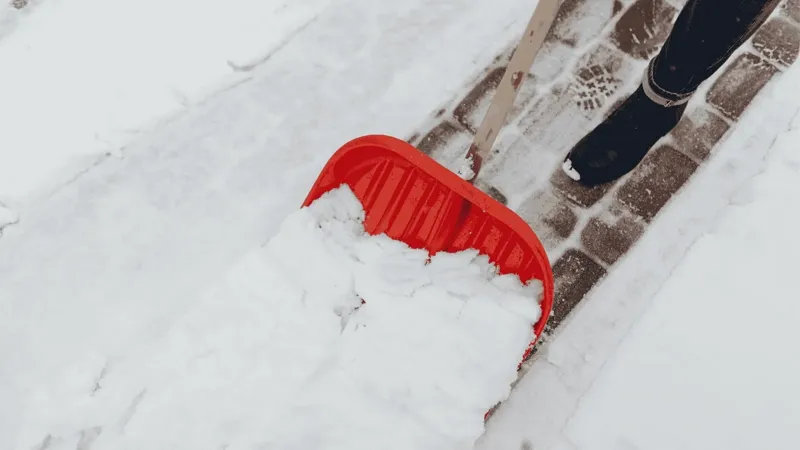
Snow shovel clearing a brick sidewalk down to the pavers

Snow Shoveling & Sidewalks

Bethlehem's rowhome blocks, historic district brick walks and downtown storefronts have far more sidewalk frontage than parking, and the city gives owners 24 hours to open a three foot path and the curb ramp. Hand crews on a fixed route are the practical answer.

Learn more
Salt spreader truck loaded for de-icing roads and parking lots

Salting & Ice Management

Hillside streets on the South Side and around the Lehigh University campus turn dangerous with a thin glaze, and melt and refreeze off plowed banks is a daily problem after every storm. Pretreating with brine and returning with salt keeps steps, slopes and landings usable.

Learn more
Tractor with an orange plow blade clearing snow outside a commercial building

Commercial Snow Removal

Strip centers on Stefko Boulevard and Schoenersville Road, medical offices and the warehouse campuses in the South Side industrial parks all need lots, docks and entrances open on a schedule, with time stamped records of every visit.

Learn more

Every Service We Offer in Bethlehem

Contract one service or combine several. Every property starts with a site walk.

  • Snow Plowing

    Truck and loader plowing for driveways, lots and private roads across the Lehigh Valley and seven surrounding counties.

  • Commercial Snow Removal

    Written snow and ice contracts for commercial sites, covering plowing, salting, walks, hauling and time-stamped service records.

  • Residential Snow Removal

    Driveways, front walks, steps and public sidewalks cleared for homes, twins and rowhomes on a set route after every storm.

  • Snow Shoveling & Sidewalks

    Hand crews clear sidewalks, steps, ramps and entrances for homes, rowhomes and storefronts, then treat for ice.

  • Driveway Snow Removal

    Driveways plowed or blown edge to edge, with the end of the driveway reopened after the municipal plow passes.

  • Parking Lot Plowing

    Parking lots plowed in a mapped order, with snow stacked away from drains, entrances and accessible spaces.

  • Salting & Ice Management

    Rock salt, treated salt and brine chosen by pavement temperature, for lots, walks, docks and entrances.

  • Roof Snow & Ice Dams

    Roof raking, ice dam steaming and flat roof snow removal for homes and commercial buildings.

  • 24/7 Emergency Snow Removal

    Around the clock storm crews for contracted sites, and same day help for others when capacity allows.

  • Snow Hauling & Relocation

    Loaders and trucks move snow off site or elsewhere on the property when stacking areas run out of room.

  • Warehouses & Distribution Centers

    Truck courts, dock aprons, trailer lots and employee lots cleared around 24/7 shift changes at big box logistics buildings.

  • HOAs & Townhome Communities

    Private roads, mailbox clusters, common walks and unit driveways cleared on a scope that matches your declaration and budget.

  • Apartments & Property Managers

    Apartment complexes and rowhome rental portfolios cleared on one multi-site contract, with a service record for every property.

  • Retail & Shopping Centers

    Parking fields, storefront walks, cart corrals, drive-throughs and fuel islands cleared in time for opening.

  • Healthcare & Medical Facilities

    Ambulance routes, patient entrances and accessible parking kept clear for medical offices, outpatient and dialysis centers.

  • Industrial & Manufacturing Sites

    Three-shift lots, material yards, rail sidings and heavy equipment routes cleared for plants that never stop.

Bethlehem Snow Removal Questions

Bethlehem's ordinance gives owners and occupants 24 hours after the snow, sleet or hail stops. The city says a cleared path at least three feet wide counts as compliance, and the abutting owner is also responsible for the curb ramp at the corner.

No. Article 721.03 makes it a nuisance to plow or place snow from a parking lot, sidewalk or other property into the street or into a travel lane. Our crews stack snow on site in areas agreed during the pre-season walk, or haul it off when there is no room.

It affects parking, not the sidewalk rule. Once a snow emergency is in effect, cars must come off posted snow emergency routes such as Broad Street and Union Boulevard. If your building fronts a route, we coordinate curb and walk clearing with that window so banks are not rebuilt after the city plows.

Yes. Rowhome and twin blocks are hand crew work: front walks, stoops, steps and the curb line, finished with salt. Landlords with several addresses can put them all on one seasonal route.

Yes. We serve the whole city on both sides of the Lehigh River and on both sides of the county line, and the same city sidewalk ordinance applies throughout.

Snow Removal in Bethlehem Starts With a Site Walk

We look at the actual property, agree where the snow goes, then give you a real number. Routes fill before the season starts.

Call Now Free Estimate