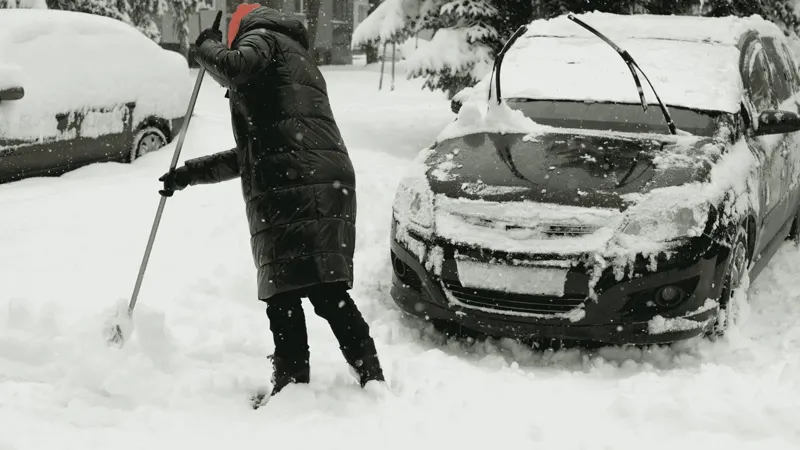
Residential Snow Removal
Driveways, front walks, steps and public sidewalks cleared for homes, twins and rowhomes on a set route after every storm.
Learn more
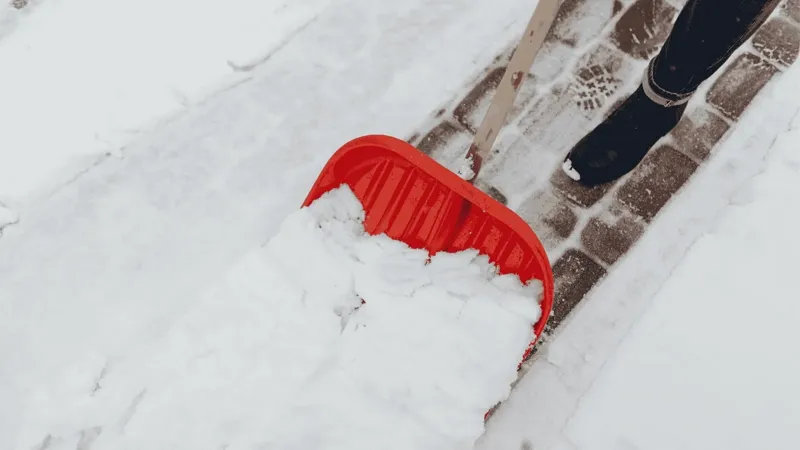
Hand crews and walk-behind blowers for sidewalks, steps, entrances and rowhome frontages, scheduled around your municipality's clearing deadline.
Frosty Snow Management provides snow shoveling and sidewalk clearing for homes, rowhomes, storefronts and commercial walks across the Lehigh Valley and surrounding counties. Crews clear public sidewalks, front walks, steps, ramps and entrances with shovels and snow blowers, then treat for ice when that is in the scope. Service runs on a route after each storm so your walk is cleared within the deadline your borough, township or city sets for property owners.
People searching for snow shoveling near me usually want one thing: someone reliable to clear the sidewalk before the municipality notices, a neighbor slips, or a customer walks away. In most of eastern Pennsylvania that sidewalk is the property owner's job, even though the public owns the right of way.
Shoveling is also where a lot of snow service falls apart. A plow truck cannot clear a sidewalk, a set of steps or a curb ramp, and many plow contractors treat walks as an afterthought. We run dedicated hand crews with shovels, blowers and spreaders so walks get the same attention as the pavement.
The work matters most where foot traffic is heavy and space is tight: the rowhome blocks of center city Allentown, Reading and Easton, the Main Street storefronts of boroughs such as Emmaus, Nazareth, Kutztown, Doylestown and Stroudsburg, and apartment and townhome communities where residents walk to their cars.
Pennsylvania does not set one statewide deadline for clearing sidewalks. Cities, boroughs and townships each write their own rule into the municipal code, and most place the duty on the owner, and often the occupant, of the property that fronts the sidewalk. The deadline is usually stated as a number of hours after snowfall ends, and that number differs from one municipality to the next.
Because of that, the useful question is not what the state requires but what your municipality requires. Our town pages summarize local rules where we have been able to confirm them, and your own borough, township or city code is the final word. Items that local codes commonly address include:
The tool depends on the snow and the surface. Most routes carry all three, and the crew chooses on site.
Best for steps, stoops, tight rowhome frontages and the heavy, wet snow that eastern Pennsylvania storms often bring. Plastic edged blades are used on brick and slate walks.
Fast on longer walks and light to moderate snow. Snow blowing suits storefront rows, apartment walkways and residential walks with somewhere to throw the snow.
After clearing, walks and steps are treated with salt or a faster acting ice melt when the scope includes it, especially on shaded steps where rock salt works slowly.
Center city blocks present problems that suburban routes do not. There is nowhere to put the snow except the curb line, cars are parked tight to the curb, and front steps drop straight onto the sidewalk. Clearing has to leave a path at the curb for people getting out of parked cars, without burying the car or throwing snow back into the street.
Many rowhome neighborhoods in Allentown, Reading and Easton also rely on rear alleys for garage and parking pad access, and alleys may not be plowed on the same schedule as streets. Where alley access is part of your property, the pad or garage door can be included in the service. Historic districts add another wrinkle: brick and slate sidewalks in older parts of Bethlehem and Easton need a gentler blade and careful choice of ice melt.
On long events crews make an early pass so snow on the walk never gets packed down by foot traffic.
Once snowfall ends, walks, steps and ramps are cleared to the pavement where conditions allow.
Surfaces in the scope are treated to prevent refreeze.
Meltwater from roofs and snow piles often runs across walks and freezes after dark, so walks in the scope are rechecked when conditions call for it.
There is no single statewide answer. Each city, borough and township sets its own deadline in its municipal code, usually measured in hours after snowfall ends. Check your municipality, or look at our town pages for the local rule where we have confirmed it.
Yes. Corner lots have two frontages and usually a curb ramp at the corner, and all of it typically falls under the owner. The scope for a corner property covers both frontages and the ramp so nothing is missed.
We use plastic edged shovels and blowers on brick, slate and paver walks rather than steel blades, and we choose ice treatments with the surface in mind. Tell us about older or delicate walks at the site walk so the crew knows before the first storm.
When refreeze checks are part of your scope, yes. Downspouts, roof edges and snow piles often send meltwater across walks during the day, and it freezes after sunset. Those spots are noted at the site walk and rechecked when conditions call for it.
Both. Crews carry snow blowers for longer walks and lighter snow, and shovels for steps, tight spaces and heavy, wet snow. Many properties get a mix depending on the storm.
Yes. Landlords with rowhomes or small buildings across Allentown, Bethlehem, Easton or Reading can put every address on one agreement. Each property gets its own scope, and the service is scheduled to fit the local deadline in each municipality.
Available in 50 towns across Lehigh, Northampton, Berks, Bucks, Montgomery, Monroe, Carbon, Luzerne counties. Some of the busiest:
Driveways, front walks, steps and public sidewalks cleared for homes, twins and rowhomes on a set route after every storm.
Learn more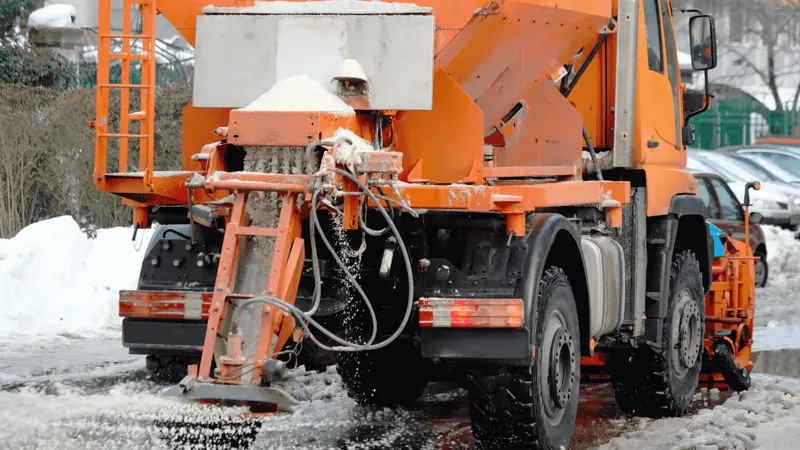
Rock salt, treated salt and brine chosen by pavement temperature, for lots, walks, docks and entrances.
Learn more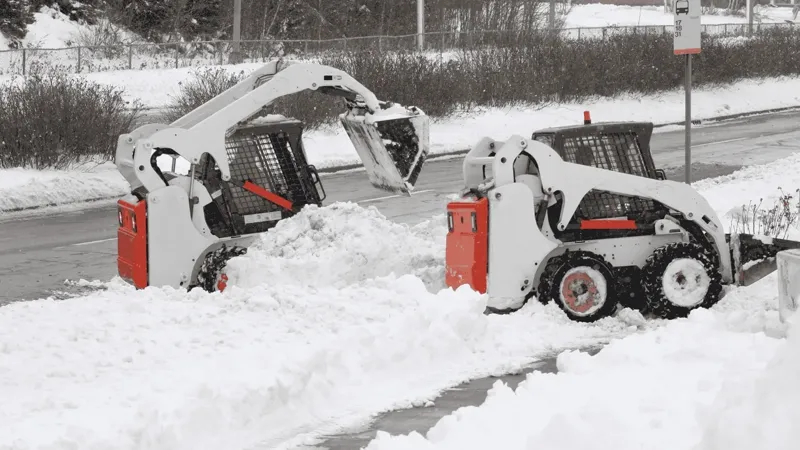
Apartment complexes and rowhome rental portfolios cleared on one multi-site contract, with a service record for every property.
Learn moreTell us about the property and we will come back with a straight answer on scope and price after a site walk.
Lehigh Valley and eastern PA properties