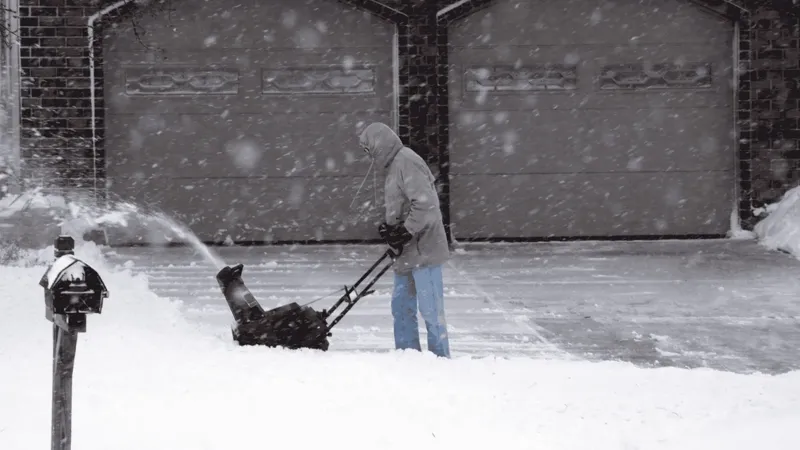
Driveway plowing works best for long, wide driveways with room to push snow, like rural drives in Berks and upper Bucks. Snowblowing works best for short driveways, pavers, tight suburban lots and steep drives where you need to throw snow clear rather than push it. Many eastern Pennsylvania homes need both: a plow for the length and a blower or hand crew near the garage, walks and steps.
The short answer by driveway type
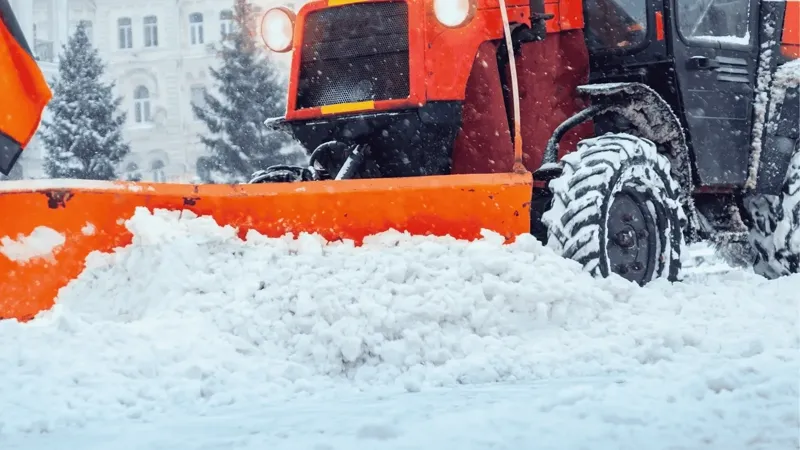
A plow pushes snow and needs somewhere to put it. A snowblower lifts snow and throws it, which is slower but leaves cleaner edges and works in tight spaces. Neither is better in general; each suits certain driveways.
| Driveway | Better fit | Why |
|---|---|---|
| Long rural drive (Berks, upper Bucks, Lehigh farm country) | Plow | Covers length fast, snow can be pushed to the sides |
| Short suburban two car drive | Snowblower | No room to stack, clean finish near the garage |
| Steep drive (Slate Belt, Poconos, South Mountain) | Plow plus treatment, blower at top | Push downhill, salt or grit for traction |
| Brick or concrete pavers | Snowblower or plow with protective edge | Reduces risk of catching and lifting pavers |
| Gravel | Plow with blade raised | Leaves a thin layer so stone stays in place |
| Rowhome or alley parking pad | Snowblower or shovel | Too tight for a truck |
Steep driveways in the Slate Belt and the Poconos
Driveways that climb off roads in Bangor, Pen Argyl and Wind Gap, on the ridges around Jim Thorpe and Palmerton, and up the slopes of Monroe County behave differently from flat suburban drives. Snow packs quickly under tires, and a thin glaze on a grade is far more dangerous than the same glaze on level ground.
On steep drives, plowing is usually done downhill so the truck is never trying to climb with a load of snow on the blade. Clearing early matters more than on a flat drive, because once cars pack the snow, it becomes ice. Treatment with salt, or with grit where salt will not work in deep cold, is part of the job. The flat pad at the top near the garage is often finished with a blower.
Pocono properties at higher elevation also see more snow and longer cold spells than the Lehigh Valley floor, so they may be triggered more often. That is worth factoring into how you pay for service.
Long rural drives in Berks and upper Bucks
Farmhouse lanes around Kutztown, Oley and Fleetwood in Berks, and the long drives off back roads in upper Bucks near Quakertown and Perkasie, can be hundreds of feet from the road to the house. Snowblowing that distance takes time, and in wind the drive can drift back in.
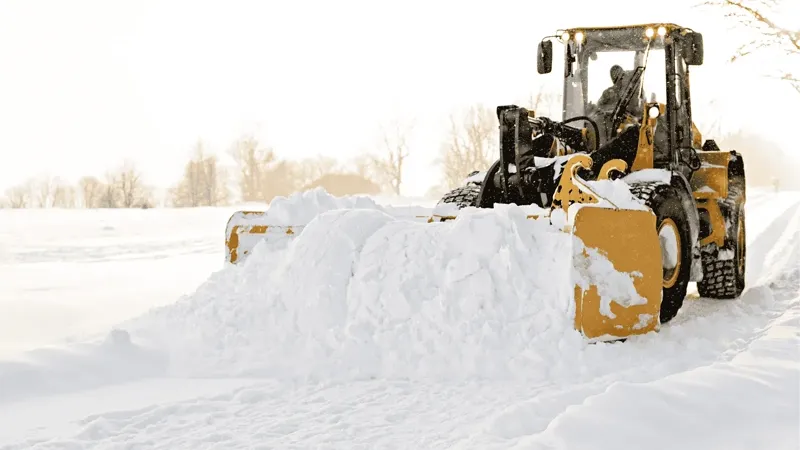
A plow is the practical tool here. The main thing to plan is where snow goes: it should be pushed well back from the edges early in the season so later storms have room, and away from wells, ditches and culverts. Mark culvert headwalls, mailboxes and field edges with stakes before the ground freezes.
Pavers, stamped concrete and gravel
Brick and concrete pavers are common in newer Lehigh Valley subdivisions and in historic Bethlehem and Easton. A steel plow edge can catch a raised paver. Many contractors use a poly or rubber cutting edge, or clear pavers with a blower. Ask how your surface will be handled before the first storm.
Gravel drives are a different issue. Plowing to bare ground scrapes stone into the lawn. The fix is to set the blade slightly high or use shoes on the plow so a thin layer of snow stays down. In early winter, before the ground freezes, gravel is most vulnerable.
How costs compare (without made up prices)
Prices vary by driveway, town and contract. Rather than quote numbers here, here is what moves the cost in each direction. Our snow removal cost guide covers price ranges in more detail.
- Length and width: more area means more time, for plows and blowers alike.
- Slope: steep drives need more care and usually more treatment.
- Surface: pavers and gravel take more time to do well.
- Extras: walks, steps and the front stoop are hand work and add time.
- Salt or grit: usually priced per application.
- Contract type: seasonal, per push or per event.
- Location: higher elevation Pocono and Slate Belt properties may see more triggered visits.
Many driveways need both
The most common answer for a Lehigh Valley single family home is a combination: a plow for the main run of the driveway and a blower or shovel for the area in front of the garage, the walk to the front door and the steps. That combination is quicker than blowing the whole thing and cleaner than plowing everything. It also means the steps and walk get attention from a person with a shovel and ice melt, which is where most slips at home actually happen.
Think also about the end of the driveway. Township and PennDOT plows leave a windrow of heavy, packed snow across the apron, often after your driveway has already been cleared. Ask whether the contract includes a return trip to open it, since that plowed-in apron is what actually keeps you from getting out in the morning.
Whatever you choose, walk the driveway with the contractor before the season, mark the edges, and agree on the trigger depth written into your contract.