
A Lehigh Valley property manager's pre-storm checklist covers four things: marking the site (stakes on curbs, islands, drains and hydrants), planning where snow goes, getting salt and tenant notices in place, and knowing the snow emergency parking rules in cities like Allentown, Bethlehem and Reading. Add a service log requirement so every plow and salt visit is recorded with a time stamp.
October: walk the site and mark it
Every hazard is easier to see before it is buried. Walk each property with your contractor while the ground is soft enough to set stakes. In the older parts of Allentown, Bethlehem and Easton you will find raised curbs, granite edges and cellar doors in the sidewalk; in newer complexes along Route 22 and in Upper Macungie you will find landscape islands, low bollards and speed bumps.
- Stake curb lines, islands, drain inlets and the edges of drives with tall markers.
- Mark fire hydrants and fire department connections so they are not buried by piles.
- Photograph existing damage to curbs, turf and signs so spring claims are fair.
- Note steps, ramps and accessible parking that need hand crews.
- Check that downspouts do not discharge across walks, where melt refreezes overnight.
Agree on a stacking plan
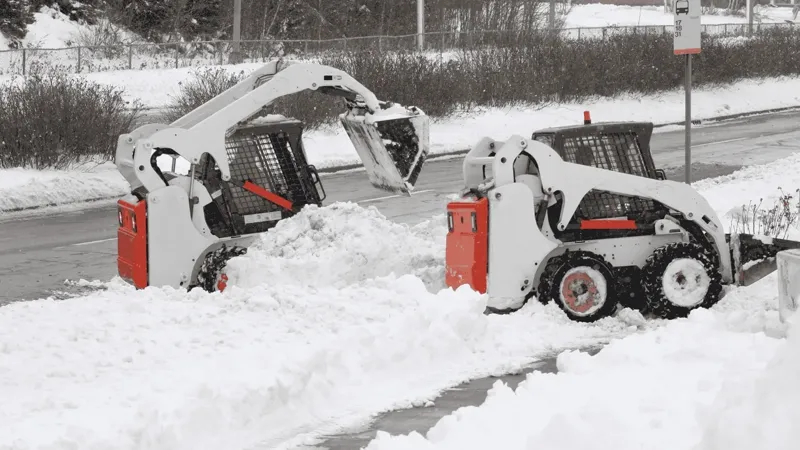
A stacking plan is a marked site map showing where snow goes. It prevents piles in accessible spaces, on top of storm drains and against sight lines at your exits. The Pennsylvania Department of Environmental Protection specifically recommends not piling snow on storm drains or ditches, because snow and debris can block drainage and cause localized flooding.
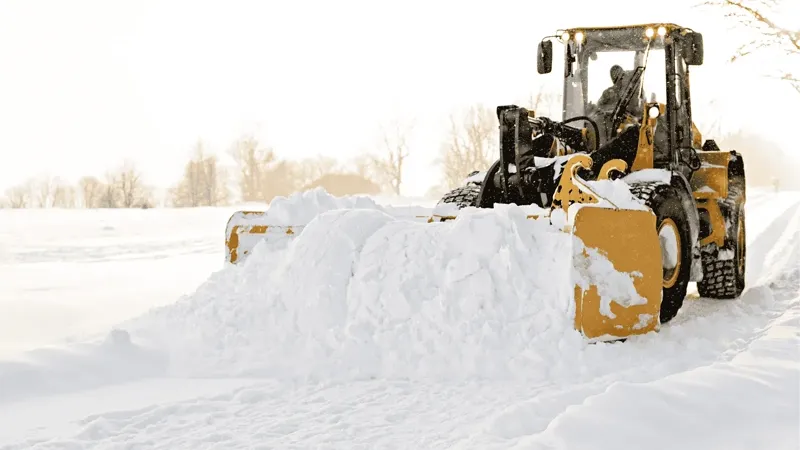
Center city properties are the hard case. A mixed-use building on a Reading or Allentown block may have no place to stack at all, so the plan should say when snow will be hauled away and who approves it. Suburban sites should reserve their piles for the low end of the lot so meltwater runs toward inlets instead of across walks.
Salt storage and materials
If you keep bagged ice melt on site for staff or tenants, store it indoors or on a pallet under cover. The DEP fact sheet advises storing salt on impermeable surfaces, and notes that documented contamination from deicers is usually tied to improper storage rather than to application.
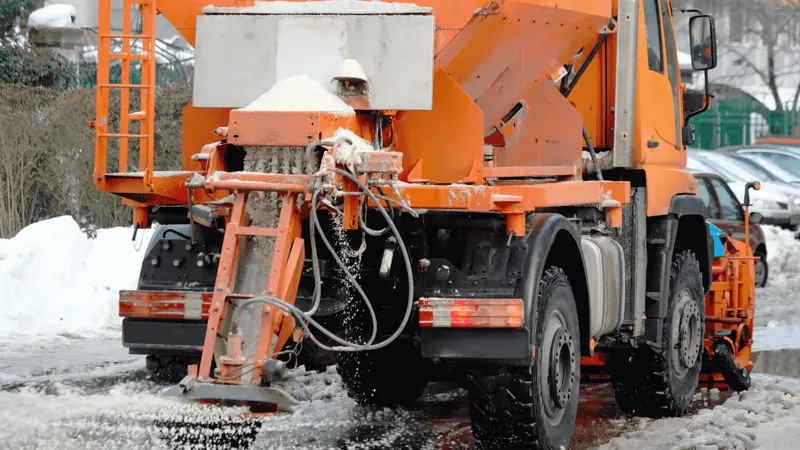
Tell the contractor about any surface that needs different treatment: new concrete poured this year, stamped concrete, brick pavers at a building entrance, or planting beds that line a walk. Many managers also ask for pre-treatment with liquid brine before forecast storms, which helps stop ice from bonding to pavement.
Tenant notices and snow emergency parking
Tenants cause most of the problems a plow crew runs into: cars left in the middle of a lot, cars on snow emergency routes, and residents shoveling their spaces back into the drive aisle. A notice before the season prevents most of it.
If you manage buildings in the cities, include the local snow emergency rules. Allentown designates snow emergency routes, and its code says an emergency takes effect four hours after it is announced. During recent declarations the city opened parking decks for free. Bethlehem posts snow emergency routes with signs, and the Bethlehem Parking Authority has kept its gated garages free until four hours after an emergency is lifted. Reading lists 14 snow emergency routes and, during a declared emergency, lets vehicles park free at listed Reading Parking Authority lots and garages; cars left on the routes can be ticketed and towed at the owner's expense.
| City | What tenants need to know | Where to check |
|---|---|---|
| Allentown | Move cars off posted snow emergency routes once the emergency takes effect; parking decks have been opened free during declarations | City code Article XI and city announcements |
| Bethlehem | Posted snow emergency routes must be cleared; BPA garages have been free until 4 hours after the emergency ends | City Article 523 and the Bethlehem Parking Authority |
| Reading | Cars on the 14 snow emergency routes can be ticketed and towed; listed RPA lots are free during the emergency | City of Reading Snow Emergency page |
The week before and the night of
When the National Weather Service starts talking about a storm, run through a short list:
- Confirm the contractor has the storm on their board and the current site map.
- Post parking and snow emergency reminders in lobbies and by email or text.
- Clear out dumpster enclosures and loading zones so they can be plowed.
- Check that entrance mats, ice melt buckets and hand shovels are staged for staff.
- Make sure the after-hours contact list is current for both you and the contractor.
Service logs: the record you will want later
Require a time-stamped log for every visit: arrival, departure, what was plowed, what was salted and with what, and conditions at the time. Photos help. Keep your own notes of tenant complaints and when you called the contractor.
Ask the contractor how logs are delivered: after every storm, weekly, or on request. A shared folder per property works well for managers who oversee buildings in several towns, for example a portfolio split between Allentown, Whitehall and Wyomissing. When a tenant emails that the lot was not touched, you can answer with the arrival time and a photo instead of a phone call to the crew.
These records matter for billing disputes and for insurance claims. In Pennsylvania, slip and fall cases often turn on what the conditions were and what the owner knew and did, so a clean log is worth more than a memory of the night.
Sources
- City of Allentown Code, Article XI: Snow Routes; Snow Removal (eCode360)
- Lehigh Valley Public Media: Allentown leads snow emergency declarations ahead of major winter storm
- City of Bethlehem Codified Ordinances, Article 523: Snow Emergency Routes
- Bethlehem Parking Authority: Snow Emergency notice
- City of Reading: Snow Emergency page
- PA Department of Environmental Protection fact sheet: Environmentally Sound Snow Management and Disposal (3800-FS-DEP1634, rev. 9/2025)